Welcome to Meiara, India's First Affordable Luxury Brand

Cart
0
When it comes to gemstones—especially those destined for the spotlight in engagement rings, statement necklaces, or cherished heirloom pieces—few factors captivate the imagination like “fire.” Even people new to the world of fine jewelry are drawn to that magical play of rainbow light seen in certain gems under the right conditions. But what is “fire” actually, what causes it, and how do the two contemporary titans—moissanite and diamond—compare when it comes to delivering spectacle and charisma? Let’s explore the phenomenon, debunk common misconceptions, and discover why understanding fire could completely change what you admire in a gemstone.
What Is Fire in a Gemstone?
First, some clarity: In gemology, “fire” refers specifically to dispersion—the ability of a gemstone to split white light into its component spectral colors (red, orange, yellow, green, blue, violet). When you move a gem in the sunlight and flashes of color appear like miniature rainbows moving across the stone's surface, you’re witnessing fire. This effect arises because different wavelengths (colors) of light bend (refract) by different amounts inside the crystalline structure of a gem. The higher the dispersion, the more visible the rainbow flashes.
Dispersion is scientifically measured and inherent to a mineral species. It’s not a marketing term, but a physical property denoted by a numerical value. For context, diamond has a dispersion of 0.044, while moissanite boasts a staggering 0.104. On paper and in real life, this makes a world of difference.
Moissanite: The Master of Fire
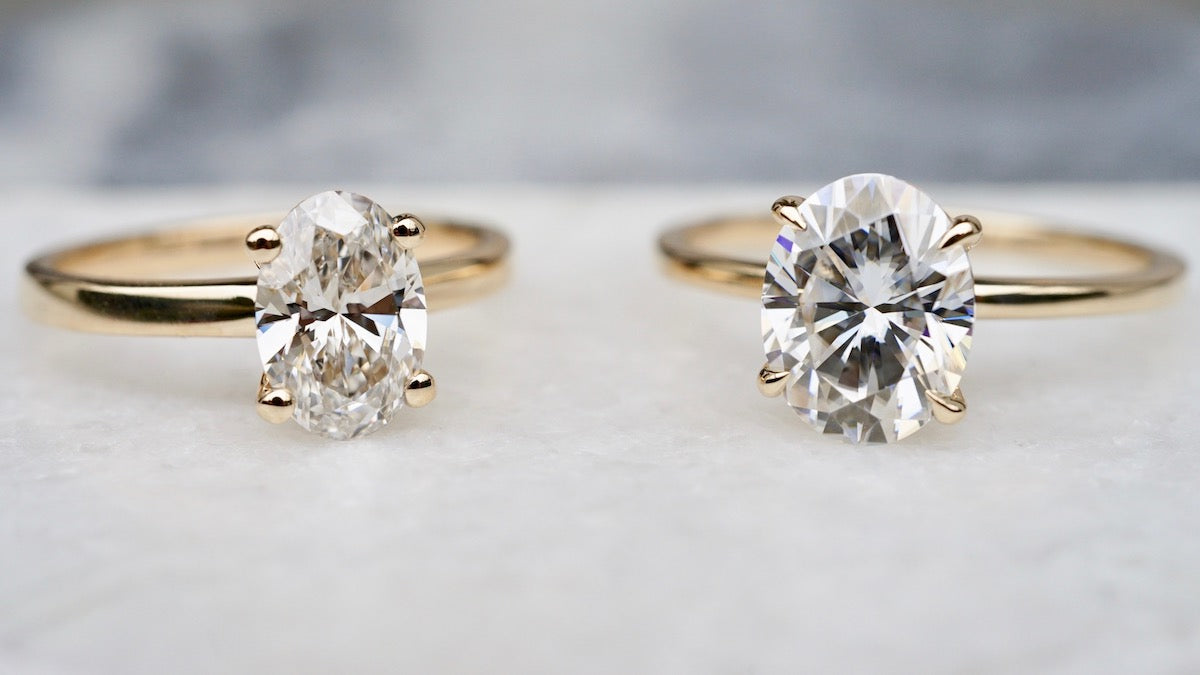
Let’s begin with moissanite. This lab-created gemstone, originally discovered from meteorite fragments and now engineered for jewelry, is celebrated for its extraordinary fire. With a dispersion more than double that of diamond, moissanite throws out vivid flashes of red, green, yellow, and blue under almost any light, especially direct sunlight and spotlights. Many find this effect hypnotic and joyful—the quintessential “bling” factor.
Why Is Moissanite’s Fire So Intense?
Moissanite’s crystalline structure bends and splits light to a much greater degree than diamond does. Paired with its high refractive index, this means that even in average lighting, you’ll spot colorful flares crossing the stone. For those who believe jewelry should stand out, signal boldness, and invite questions—moissanite’s fire is spellbinding.
Younger jewelry buyers, and those seeking alternatives to tradition, are increasingly drawn to the lively, modern light show that moissanite provides. On social media and in real life, the disco-ball effect is unmistakable—a moissanite ring can catch glances from across a room.
Is Too Much Fire a Downside?
Every strength has a counterpoint. For some traditionalists (and especially those used to the subtler elegance of diamonds), moissanite’s fire can appear “too much”—almost theatrical under bright lights. In large center stones and specific cuts, the color flashes can overshadow the soft white brilliance some seek in an heirloom piece. But for those who want their jewelry to express personality, fun, and flair, moissanite’s dramatic fire is its greatest selling point.
Diamond: Timeless Brilliance with Subtlety
Diamonds have captured hearts for centuries—partly due to their unrivaled status as the hardest natural substance, but also because of their unique way of handling light. Diamond’s “fire” is famous, but it’s actually subtler and more refined compared to moissanite. The white flashes—known technically as diamond’s brilliance—are more pronounced, while the rainbow colors of fire make cameo appearances.
Why Do Diamonds Have Less Fire?
Diamond’s lower dispersion (0.044) means that when white light enters, less of it splits into rainbow colors compared to moissanite. Instead, diamonds return sharp, clean white light along with occasional fire, especially in excellent cuts and under spotlights. This is part of why diamonds so often “glow” with brilliance rather than “spark” with color.
Most high-end diamond jewelry is designed to optimize this sophisticated look. The play of white and colored flashes in well-cut diamonds is balanced, nuanced, and elegant. Those who love diamonds often describe their fire as “complex” rather than “loud”—a quality that has cemented diamond’s place in engagement traditions worldwide.
The Persuasive Case for Focusing on Fire
Here’s the key insight: There is no universal answer to which is better—just personal priorities. If you’re buying for yourself or a customer, understanding how much fire you want isn’t trivial. It’s at the very heart of what makes a piece of jewelry feel “right.”
Why should you care about fire?
-
Self-expression: The rainbow flashes of moissanite deliver a playful, contemporary vibe. They catch attention, start conversations, and suit those who want their jewelry to be noticed and photographed. Diamonds are classic, offering sophistication that never shouts, just whispers luxury in every glint.
-
Matching personal style: Someone with a bold, expressive style may relish moissanite’s light show, while those who prefer understated elegance will likely prefer the restrained fire of a diamond.
-
Lighting environments: If you spend much time in natural sunlight or theatrical lighting, moissanite’s fire truly shines. For office settings or softer ambient lighting, diamond’s brilliance may feel more appropriate and harmonious.
-
Budget and value: Moissanite offers unmatched fire at a budget-friendly price, making larger center stones with spectacular effects accessible to more buyers, without compromise on durability.
Choosing the Right Gemstone for Your Lifestyle
When deciding between moissanite and diamonds, ask yourself: Do you want every glance at your hand to dazzle with a spectrum of colors, or do you prefer the subtle, refined interplay of white and colored light that only an expertly cut diamond provides?
Both stones excel in durability, clarity, and ethical sourcing, especially when lab-grown. The distinction truly boils down to your emotional connection to “fire.” Do you want jewelry that dances with color and drama (moissanite), or jewelry that gleams with heritage and quiet sophistication (diamond)?
Conclusion: Celebrating Fire in All Its Forms
The poetic truth is that there is no wrong answer—only a spectrum of beauty. Moissanite brings a high-energy, joyful excitement to the world of fine jewelry, making every movement an event. Diamonds, meanwhile, continue to enchant with their classic, restrained fire—the sparkle of royalty, of tradition, of “forever.”
Understanding the science and artistry behind gemstone fire empowers you to make a choice that truly resonates with your spirit—not just your eye. Whether you choose moissanite’s rainbow celebration or the timeless allure of diamond, you’re carrying a story of light—captured from the earth or forged in a lab—made uniquely yours.